Regenerative Medicine for Back Pain in Santa Clarita
Regenerative Medicine, Lower Back Pain Treatment, Santa Clarita
Living With Lower Back Pain? Why Regenerative Medicine May Be the Answer
Chronic lower back pain can quietly take over your life—limiting how far you walk, how long you sit, and even how easily you get out of bed. For adults over 50 in Santa Clarita, regenerative medicine offers a modern, biologically focused approach that aims to support your body’s natural healing instead of simply masking pain.

How Common Is Chronic Lower Back Pain After 50?
If you are dealing with daily back pain, you are far from alone. Globally, low back pain affects an estimated 619–629 million people, or roughly one in 13 people, and that number is projected to rise to nearly 890 million by 2050 as populations age (World Health Organization; Global Burden of Disease studies).
Among adults aged 55 and older, the burden is even more pronounced: around 271.7 million older adults worldwide were living with low back pain in 2021, with particularly high prevalence in this age group. In the United States, the Centers for Disease Control and Prevention report that about 24.3% of adults live with chronic pain, and 8.5% experience “high-impact” chronic pain that interferes with work and daily activities—conditions in which chronic lower back pain is a major contributor (CDC National Health Interview Survey, 2023).
For many residents of Santa Clarita, these statistics translate into very real limitations: cutting golf games short, avoiding long drives down the 5 or 14, or saying no to family outings because standing or sitting too long is simply too painful. The good news is that advances in lower back pain treatment now include regenerative medicine options designed to address underlying tissue damage, not just the symptoms.
Common Causes of Chronic Lower Back Pain After 50
As we age, the structures in the lumbar spine—discs, joints, ligaments, and surrounding soft tissues—gradually wear down. Several common diagnoses often show up on X‑rays or MRI scans for adults over 50 in Santa Clarita who seek regenerative medicine back care:
- Degenerative disc disease (DDD) – Despite the name, this is not a “disease” in the infectious sense. Over time, spinal discs lose water content and height, becoming less flexible and more prone to small tears. This can cause chronic, deep aching in the lower back, stiffness, and pain that worsens with sitting or bending. Many patients searching for “degenerative disc treatment” are actually experiencing age-related disc wear that has finally become symptomatic.
- Herniated or bulging discs – When a weakened disc bulges or herniates, its inner material can press on nearby nerves. This often leads to sharp, shooting pain down the leg, numbness, or tingling—classic signs of sciatica. Even after the initial flare settles, lingering nerve irritation can keep you from walking, standing, or sleeping comfortably.
- Lumbar osteoarthritis – The small joints in the back of the spine, called facet joints, can develop arthritis just like knees or hips. This lumbar osteoarthritis can cause stiffness in the morning, pain when twisting or extending the back, and aching after prolonged standing or walking—common complaints among active older adults in Santa Clarita who want to stay mobile and independent.
- Sciatica and lumbar radiculopathy – When a nerve root in the lower spine is compressed or inflamed, pain can radiate from the lower back into the buttock, thigh, calf, or foot. This “pinched nerve” pattern, often called sciatica, can significantly limit walking distance and make even short errands feel exhausting. Many people search for sciatica treatment after traditional medications and rest have not provided lasting relief.
While each of these conditions is different, they share a common theme: progressive degeneration of discs, joints, and supporting tissues in the lumbar spine. Traditional treatments often focus on easing the pain, but not necessarily on supporting the health of these structures themselves. That is where regenerative medicine enters the picture.
Why Opioids and Steroid Injections Are Often Short-Term Fixes
For decades, standard lower back pain treatment has relied on a familiar toolbox: anti-inflammatory medications, muscle relaxants, opioid pain pills, and corticosteroid injections. These can be appropriate in specific situations, especially during severe pain flares. However, they are typically short-term solutions and do not address the underlying causes of disc or joint degeneration.
- Opioid medications – Opioids work by changing how your brain perceives pain signals; they do not repair damaged discs, joints, or nerves. Long-term use is associated with tolerance (needing higher doses for the same effect), dependence, constipation, hormonal changes, impaired thinking, and a risk of overdose. For older adults, opioids can also increase fall risk and interact with other medications. Because of these dangers, most guidelines now recommend minimizing opioid use for chronic lower back pain whenever possible.
- Corticosteroid injections – Epidural steroid injections, facet joint injections, and nerve blocks can temporarily reduce inflammation and pain. Many patients in Santa Clarita experience relief for a few weeks to a few months. However, repeated steroid exposure may weaken tissues, potentially accelerate cartilage breakdown, and affect bone density. In other words, while steroids can be very helpful in the short term, they are not designed to rebuild or support aging discs and joints over time.
How Regenerative Biologics Target the Root of Disc and Tissue Degeneration
Regenerative medicine focuses on using biologic substances—often derived from your own blood or tissues—to help support the body’s natural repair mechanisms. Rather than simply numbing pain, these therapies are designed to improve the environment in and around injured or degenerated structures in the spine, such as discs, ligaments, and facet joints.
In the context of lower back pain treatment, regenerative biologics may be used to:
- Deliver a high concentration of growth factors and signaling molecules to areas of degeneration, potentially supporting tissue repair and reducing local inflammation.
- Modulate the immune response around painful joints or discs, which may help calm chronic inflammatory cycles that keep nerves irritated and tissues painful.
- Enhance the quality of the surrounding soft tissues—such as ligaments, tendons, and muscles—that help stabilize the lumbar spine and protect irritated nerves.
While regenerative biologics cannot “turn back the clock” or guarantee full disc regeneration, emerging research suggests that, for carefully selected patients, these therapies may offer meaningful improvements in pain and function, particularly when combined with targeted rehabilitation and lifestyle changes.
PRP and Stem Cell Biologics: Their Role in Lumbar Healing
Two of the most discussed regenerative approaches for lower back pain are platelet-rich plasma (PRP) and stem cell–based biologics. Both fall under the broader category of biologic therapies and have been studied in conditions such as degenerative disc disease, lumbar facet arthritis, and radiculopathy.
Platelet-Rich Plasma (PRP) for Back Pain
PRP is created by drawing a small sample of your blood, then spinning it in a specialized centrifuge to concentrate the platelets. Platelets contain growth factors and signaling proteins that are naturally involved in healing. When PRP is precisely injected into or around painful structures in the lumbar spine, the goal is to support local tissue repair and reduce inflammation over time.
Recent research provides encouraging data:
- A 2026 systematic review of 15 randomized controlled trials (740 patients) found that PRP injections significantly reduced pain and disability for up to six months in various types of low back pain, with particularly consistent benefits for non-discogenic pain such as radiculopathy and facet-related pain.
- Studies comparing PRP to corticosteroid injections suggest that steroids may work faster in the first weeks, but PRP often provides equal or superior relief at three to six months, with a more favorable safety profile and without the tissue-thinning concerns associated with repeated steroids.
Clinical guidelines from interventional pain societies now recognize PRP as a reasonable option with fair evidence for certain lumbar conditions, especially when conservative measures have failed and surgery is not desired or appropriate. However, results can vary depending on the exact technique, the quality of PRP preparation, and the specific pain generator in your spine.
Stem Cell–Based Biologics and Other Cell Therapies
“Stem cell” therapies for back pain typically involve using cells with regenerative potential—often derived from bone marrow, fat tissue, or donated sources—to influence healing in degenerated discs or joints. In practice, many modern protocols use biologics derived from stem cell therapy sources, sometimes referred to as biologics stem cell products, which aim to deliver regenerative signals rather than implanting living stem cells that will turn into new tissue.
Current research suggests:
- Some randomized trials of bone marrow–derived cell therapies for degenerative disc disease have not shown clear superiority over placebo, indicating that not all “stem cell” approaches are equal or fully validated yet.
- Other investigational products, such as certain mesenchymal precursor cell formulations, have demonstrated longer-term improvements in pain and function in clinical trials, but they remain experimental and are not broadly approved for routine clinical use.
Overall, PRP currently has the most consistent evidence base for lumbar conditions, while stem cell–related biologics are a rapidly evolving field with promising but still developing data. Any decision to pursue these options should be made in consultation with a qualified medical professional who can carefully review the potential benefits, risks, and regulatory status for your situation.
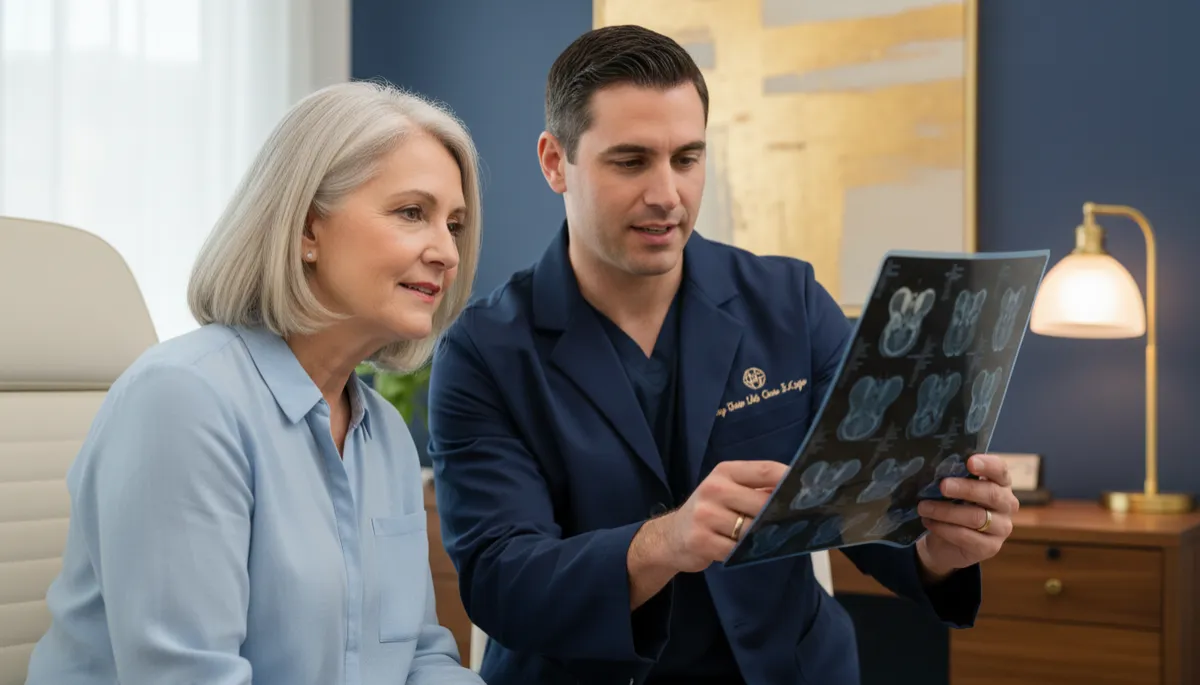
Thorough evaluation and imaging review are essential before considering regenerative back treatments.
What a SymbioStem™ Consultation for Back Pain Looks Like
For adults over 50 in Santa Clarita exploring regenerative options, SymbioStem™ offers a structured, concierge-style approach to evaluating and treating chronic lower back pain. While every patient is unique, you can generally expect the following steps during a SymbioStem consultation process:
1. Comprehensive Initial Evaluation
Your visit begins with a detailed review of your medical history, current symptoms, and lifestyle. The SymbioStem team will typically:
- Discuss how long you have had lower back pain, what makes it better or worse, and which activities you would most like to return to—whether that is walking the paseos, golfing, or playing with grandchildren.
- Review any prior treatments you have tried, including physical therapy, chiropractic care, injections, or surgery consultations, as well as any medications you are currently taking.
- Perform a focused physical examination to evaluate your posture, range of motion, neurologic function, and pain patterns that may point to degenerative disc disease, facet joint arthritis, or sciatica.
2. Imaging Review and Diagnosis Clarification
SymbioStem providers will review existing imaging—such as MRI, CT scans, or X‑rays—whenever available. If necessary, they may recommend updated imaging to better understand the structural contributors to your pain, including degenerative disc changes, herniated discs, spinal stenosis, or lumbar osteoarthritis. This step is crucial in determining whether regenerative biologics are likely to be appropriate and where they should be targeted.
3. Personalized Regenerative Medicine Plan
Based on your evaluation and imaging, the SymbioStem team designs a customized protocol. Depending on your needs and candidacy, this may include:
- Regenerative biologic injections targeting specific structures contributing to your pain, such as facet joints, supporting ligaments, or soft tissues associated with sciatica.
- Adjunctive therapies such as IV infusions, peptide protocols, or other supportive treatments intended to optimize your overall healing environment and general wellness.
- Recommendations for complementary strategies, including targeted exercises, posture modifications, and lifestyle adjustments to help maintain lumbar stability and mobility.
4. Concierge Treatment Delivery: At Home or in Clinic
SymbioStem offers a concierge model, meaning many treatments can be delivered in the comfort of your home or office, as well as in their Santa Clarita clinic. For older adults managing mobility limitations or busy schedules, this can significantly reduce the stress and time involved in getting care. The clinical team will guide you through each step of the procedure, what to expect afterward, and how to support your recovery.
5. Ongoing Monitoring and Recovery Support
Regenerative therapies typically work gradually, with improvements developing over weeks to months as your body responds. SymbioStem emphasizes continued follow-up to monitor your progress, adjust your plan if needed, and coordinate supportive care such as physical therapy or home exercise programs. The goal is not only to reduce pain, but to improve function and help you return to the activities that matter most to you.
Are You a Candidate for Regenerative Lower Back Pain Treatment in Santa Clarita?
Not every patient with chronic lower back pain is an ideal candidate for regenerative medicine. In general, you may be a good fit to explore a SymbioStem consultation if:
- You are over 50 and have had persistent lower back pain for three months or longer, affecting your daily activities, hobbies, or sleep.
- Imaging has shown degenerative disc disease, lumbar osteoarthritis, or related structural changes, and conservative care has not provided lasting relief.
- You are hoping to avoid or delay major spine surgery, or you are not a surgical candidate for medical or personal reasons.
- You are motivated to combine biologic therapies with healthy lifestyle changes, such as gentle strengthening exercises, weight management, and posture optimization.
SymbioStem also offers a brief online quiz to help you quickly gauge whether you might be a candidate for non-surgical regenerative approaches. However, this is only a starting point; a thorough medical evaluation is always necessary before making treatment decisions.
Taking the Next Step: Talk With a Professional About Your Options
Living with chronic lower back pain is not simply about discomfort; it is about how pain reshapes your routines, your independence, and your relationships. If you are in Santa Clarita and have been searching for regenerative medicine back or sciatica treatment options beyond pills and temporary injections, it may be time to explore whether regenerative biologics—such as PRP or stem cell–derived products—could play a role in your care plan.
These therapies are not a guaranteed cure, and they are not right for everyone. But for carefully selected patients, especially those with degenerative disc or lumbar facet–related pain, early research suggests they may offer meaningful improvements in pain and function when integrated into a comprehensive, medically supervised plan.
Ready to Explore Regenerative Options for Your Back Pain?
If you are tired of living around your lower back pain—and you are interested in learning whether regenerative biologics, PRP, or stem cell–related therapies might be appropriate for your situation—the next step is a professional, one-on-one consultation.
To schedule a SymbioStem™ consultation in Santa Clarita, call 661-467-0243 or visit symbiostem.com. A member of the team can answer your questions, explain the consultation process in more detail, and help you determine whether a regenerative approach aligns with your health goals and medical history.
Before starting any new treatment, including regenerative medicine, it is essential to discuss your options with a licensed healthcare provider who understands your full medical picture. Together, you can weigh the potential benefits and limitations of emerging biologic therapies and design a plan that prioritizes safety, function, and quality of life.
Frequently Asked Questions
Can regenerative medicine treat lower back pain effectively?
Yes — SymbioStem uses stem cell therapy and PRP injections to treat lower back pain from disc degeneration, facet joint arthritis, herniated discs, and spinal inflammation. Regenerative treatments target the damaged structures in the spine, promoting tissue repair and reducing chronic inflammation at the source of pain.
What types of back pain does SymbioStem treat with regenerative medicine?
SymbioStem treats chronic lower back pain from degenerative disc disease, lumbar arthritis, facet joint syndrome, herniated discs, sacroiliac joint dysfunction, and spinal stenosis. Dr. Craig reviews your imaging and medical history to determine which regenerative approach is most appropriate for your specific back condition.
Is regenerative medicine a better option than surgery for lower back pain?
For many patients, regenerative medicine is a preferred first-line option before considering back surgery. It is minimally invasive, carries far fewer risks than spinal surgery, requires no hospital stay, and offers the possibility of genuine tissue repair. Surgery may still be needed in severe cases, but regenerative medicine often allows patients to avoid it entirely.
How many regenerative treatments are needed for back pain at SymbioStem?
The number of treatments depends on the diagnosis, severity, and the spinal structures involved. Most patients begin with 1 to 2 sessions of stem cell therapy or a series of PRP injections. Dr. Craig designs each protocol individually based on thorough evaluation of your condition and imaging.
How do I schedule a back pain consultation at SymbioStem in Santa Clarita?
Call SymbioStem at (661) 467-0243 or visit symbiostem.com to book a consultation with Dr. Micah Craig. He will review your back pain history, MRI or X-ray findings, and treatment goals to design a personalized regenerative medicine plan for lasting lower back pain relief.